Understanding Beige Living Room Design (It’s Way More Interesting Than You Think)
Okay, first things first.
Not all beiges are created equal.
I used to think beige was just… beige.
But when I started actually looking at paint swatches and fabric samples, I realized I’d been missing out on a whole spectrum.
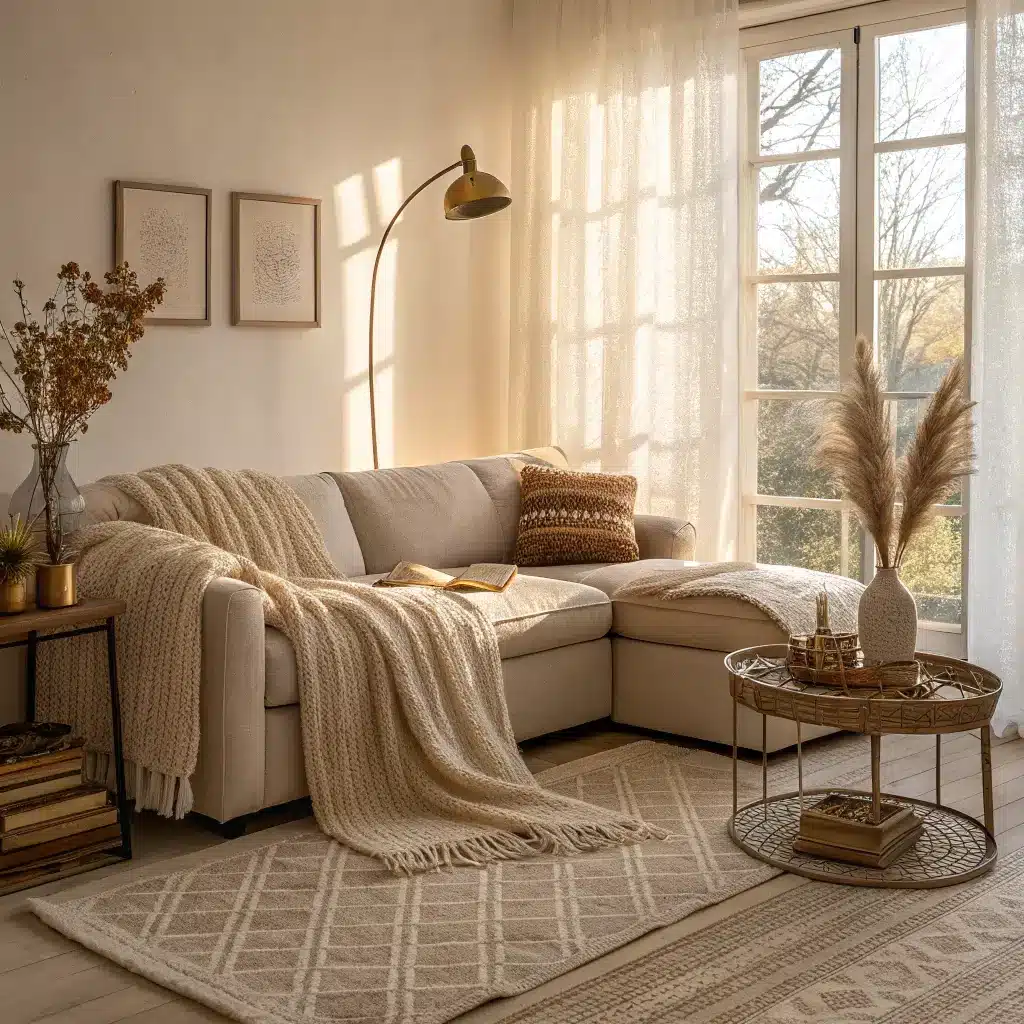
Warm beiges lean into creamy, buttery, almost golden tones. They make a room feel cozy and inviting, like you’re wrapped up in your favorite sweater.
Cooler beiges have more gray undertones, which gives them a modern, sophisticated feel.
Taupe sits somewhere in the middle—it’s got depth and complexity that pure beige sometimes lacks.
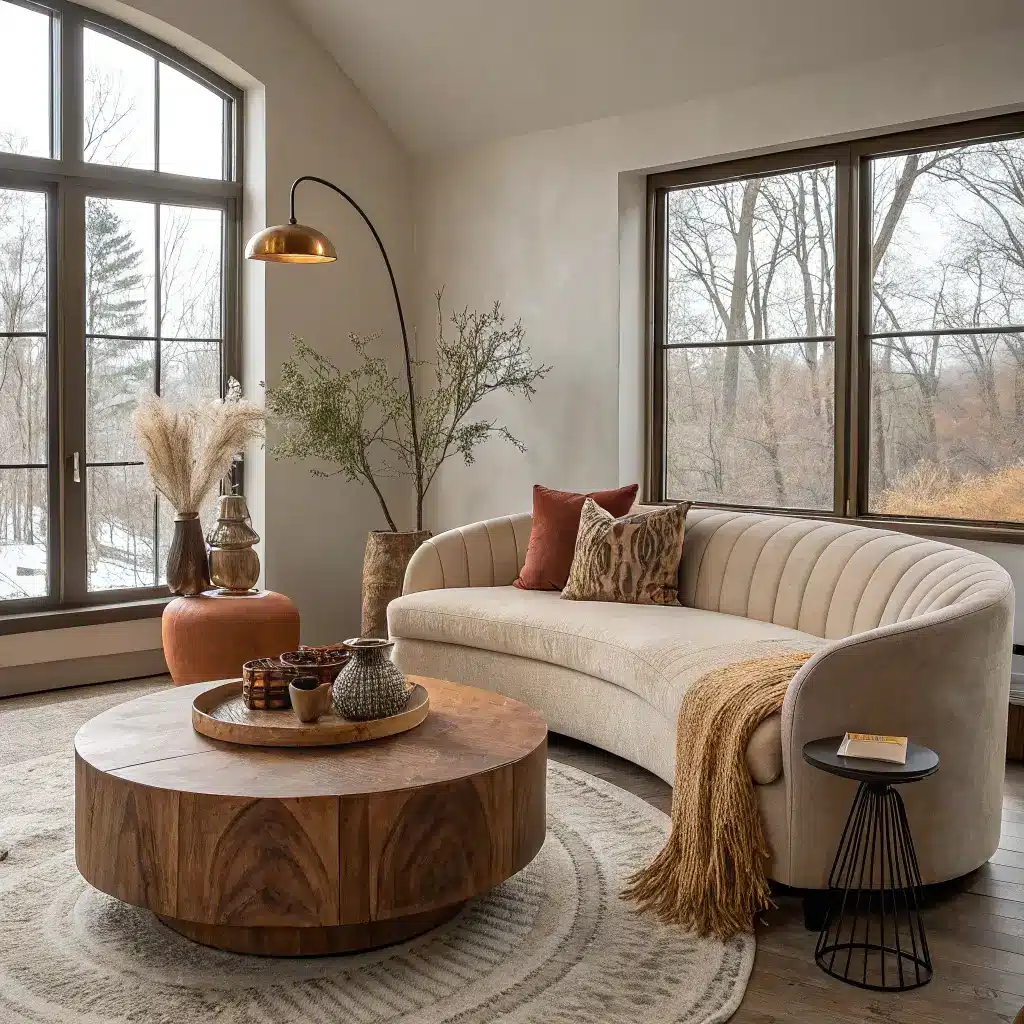
The magic of a beige living room is that it gives you a neutral canvas to work with. You’re not locked into a specific aesthetic. You can go Scandinavian-minimal, bohemian, or modern organic. It’s one of the most flexible design styles out there.
The Real Timeline (This Isn’t as Complicated as You Might Think)
Here’s what nobody tells you about styling a living room: the setup doesn’t take that long. Rearranging furniture and adding pillows? 1-2 hours. Shooting content? 2-5 hours tops.

Natural light is your best friend. I usually style my space between 10 AM and 2 PM when the light is soft and warm—perfect for beige tones.
Building Your Beige Living Room Color Palette (The Secret Is Layering)
This is where things get really fun. The biggest mistake? Making everything one flat beige color.
Instead, layer your tones. Start with a warm beige on the walls like Sherwin-Williams Accessible Beige. Then add complementary beige furniture, taupe rugs, cream pillows, and subtle patterns for depth.
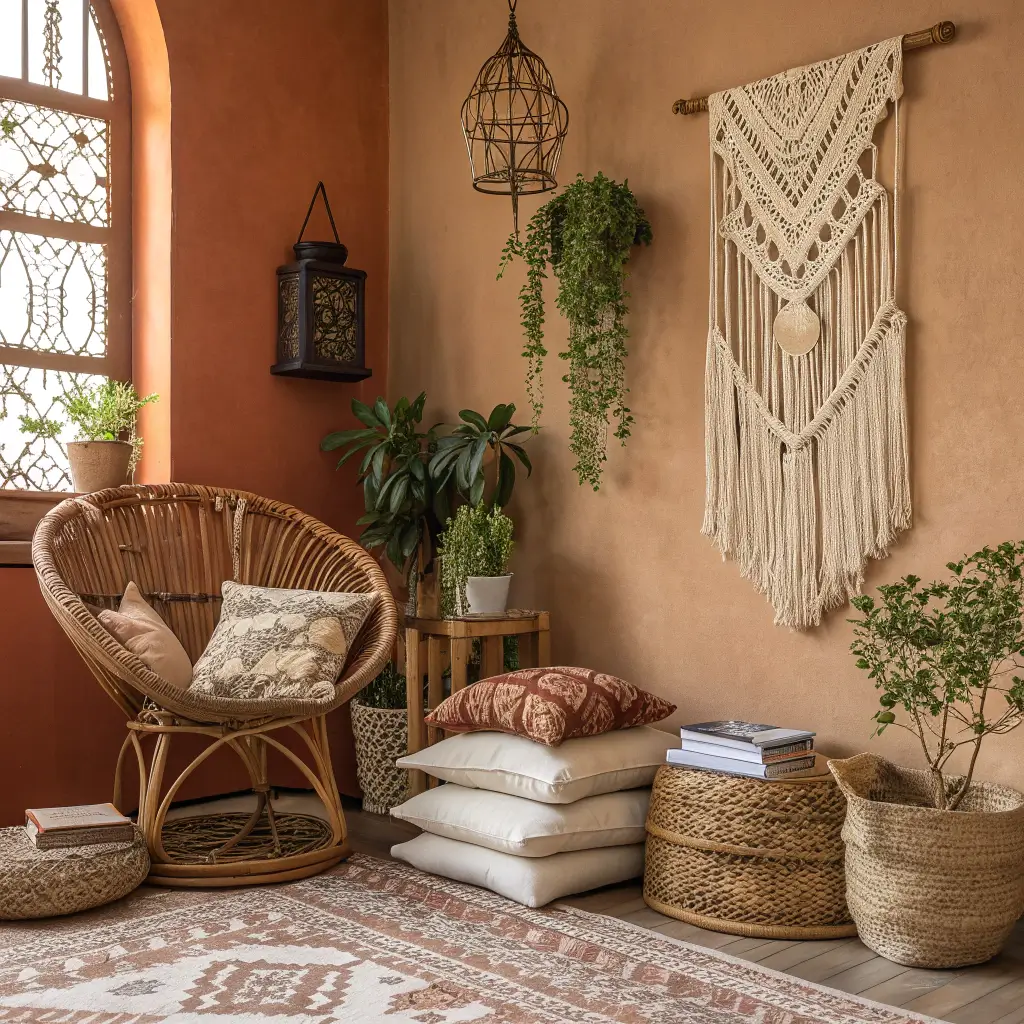
Then add accent colors: terracotta, rust, slate blue, copper. These small touches make the room feel intentional and layered.
Essential Elements You Actually Need (Not a Massive Shopping List)
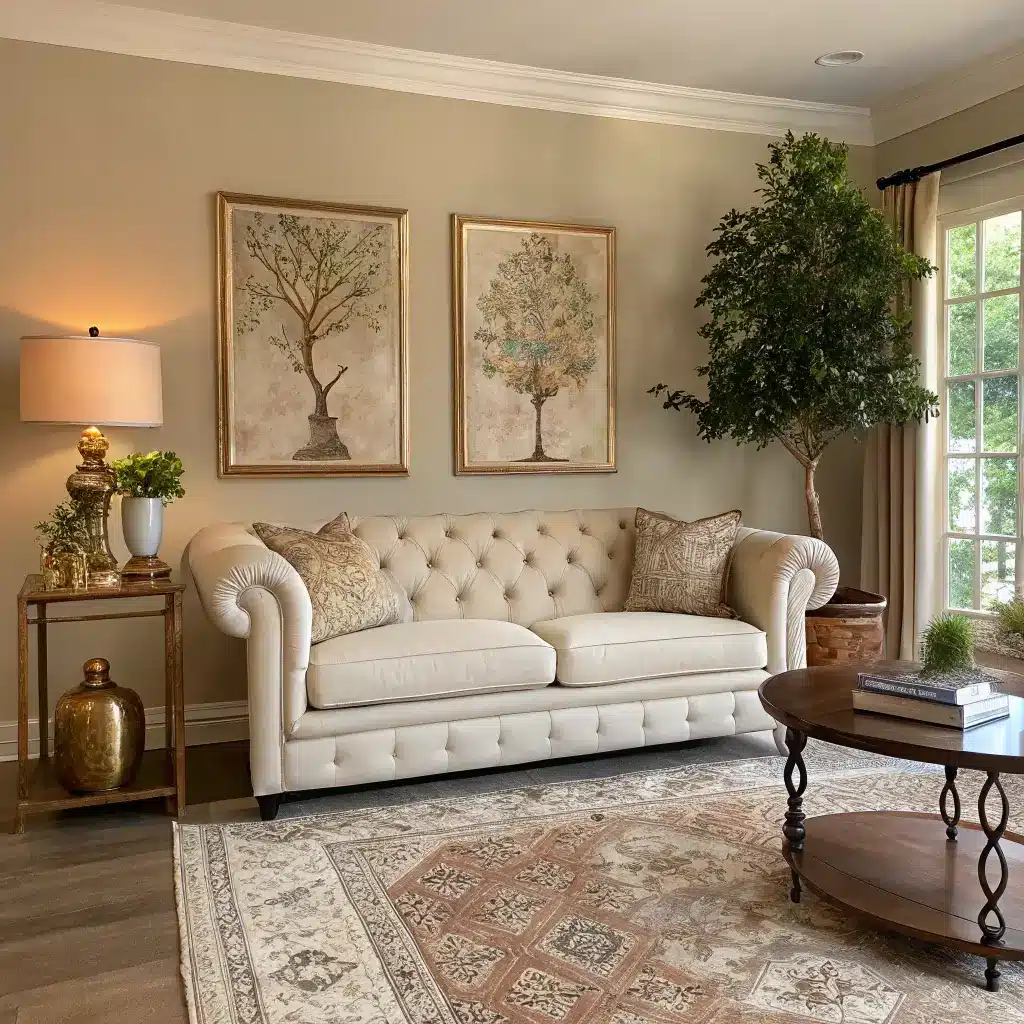
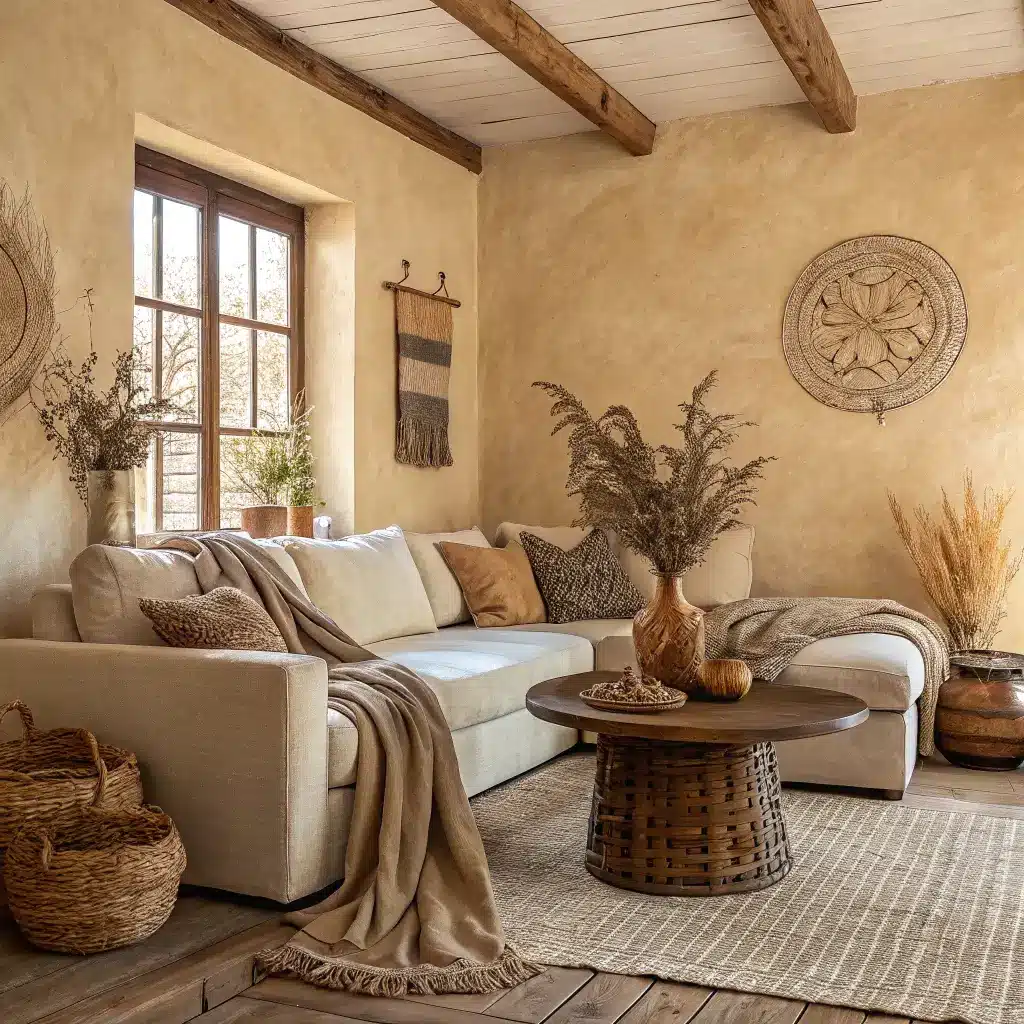
Start with your sofa—linen or velvet in beige or cream. Add a rug in jute, wool, or soft brown. Mix up your throw pillows by texture and shape. Don’t forget the cozy throw blanket.

Then layer in the extras: rattan baskets, wooden side tables, plants, books, and sculptural decor.
The Setup Process (Step by Step, Because I Don’t Want You Stressed Out)
Start by clearing your space. Arrange your big furniture, lay down your rug, and step back. Add symmetry with armchairs or side tables.
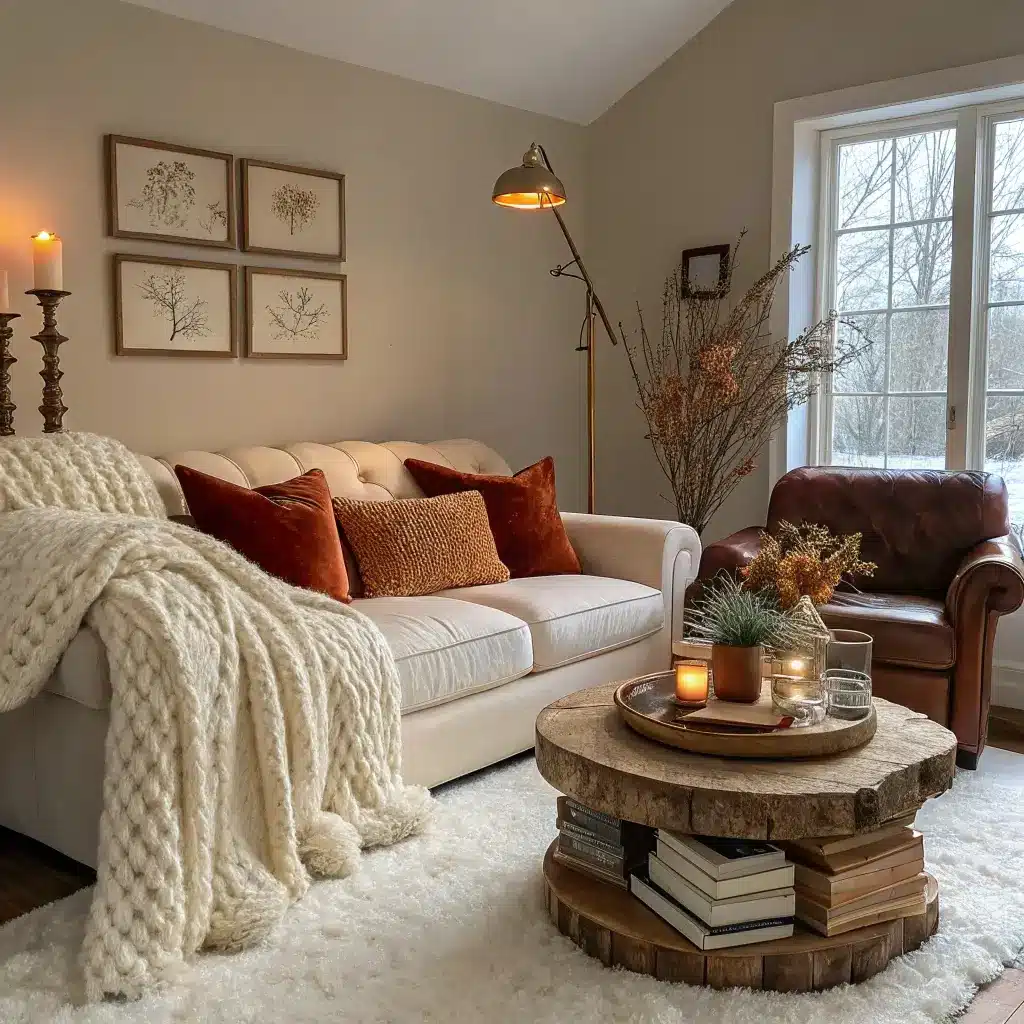
Then layer in your styling pieces: pillows, throws, trays, baskets, and books. Negative space is your friend—don’t overcrowd.
Texture Is Actually Your Best Friend (This Is the Secret Nobody Tells You)
Texture makes a beige room feel alive. Mix linen, velvet, wool, jute, wood, and rattan. These surfaces catch light differently and give your room depth and warmth.
Lighting Changes Everything (And You Can’t Skip This Part)
Lighting is the secret sauce of a beige living room. Add dimmers, table lamps, floor lamps, and even string lights. Use warm white bulbs (2700K) to keep everything cozy.
Adding Personality Without Abandoning the Aesthetic (It’s Easier Than You Think)
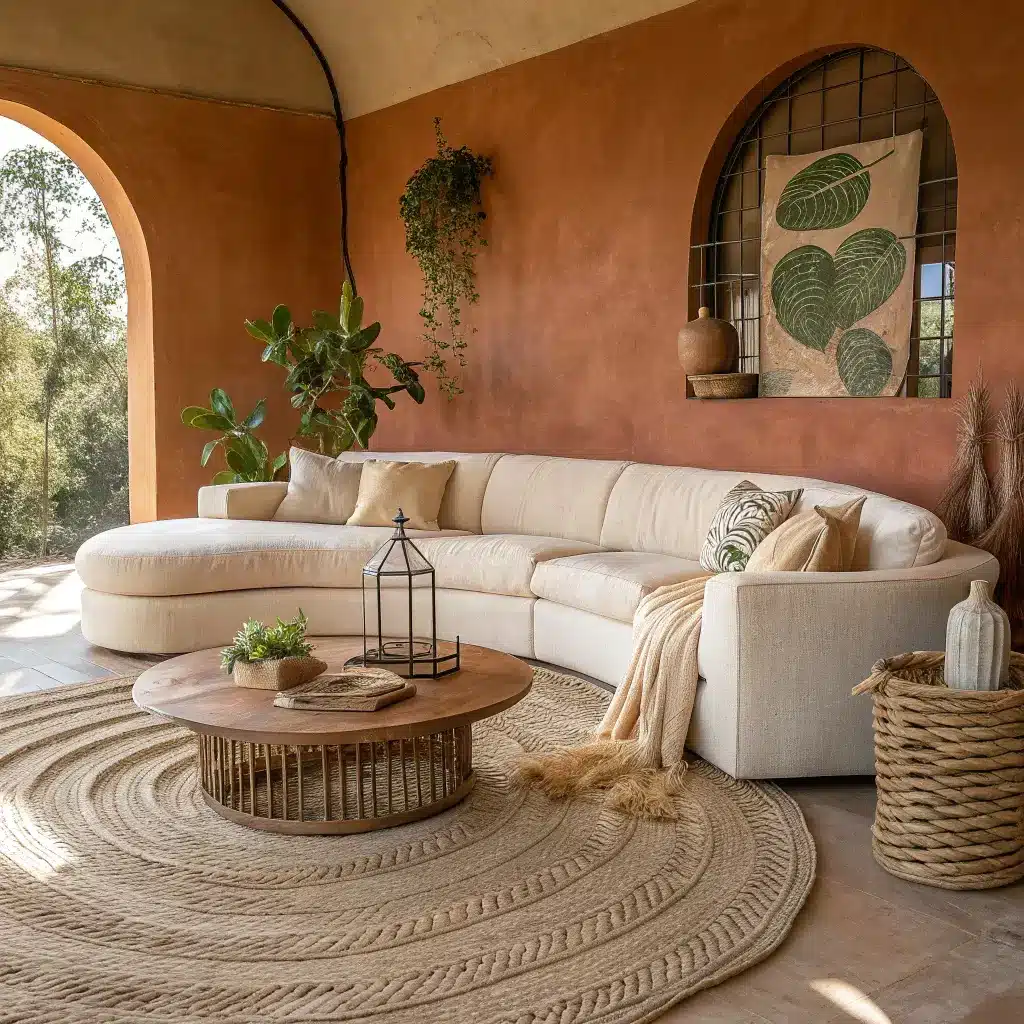
Use artwork, plants, and collections to make the space yours. Beige is your backdrop—your personality is the foreground.
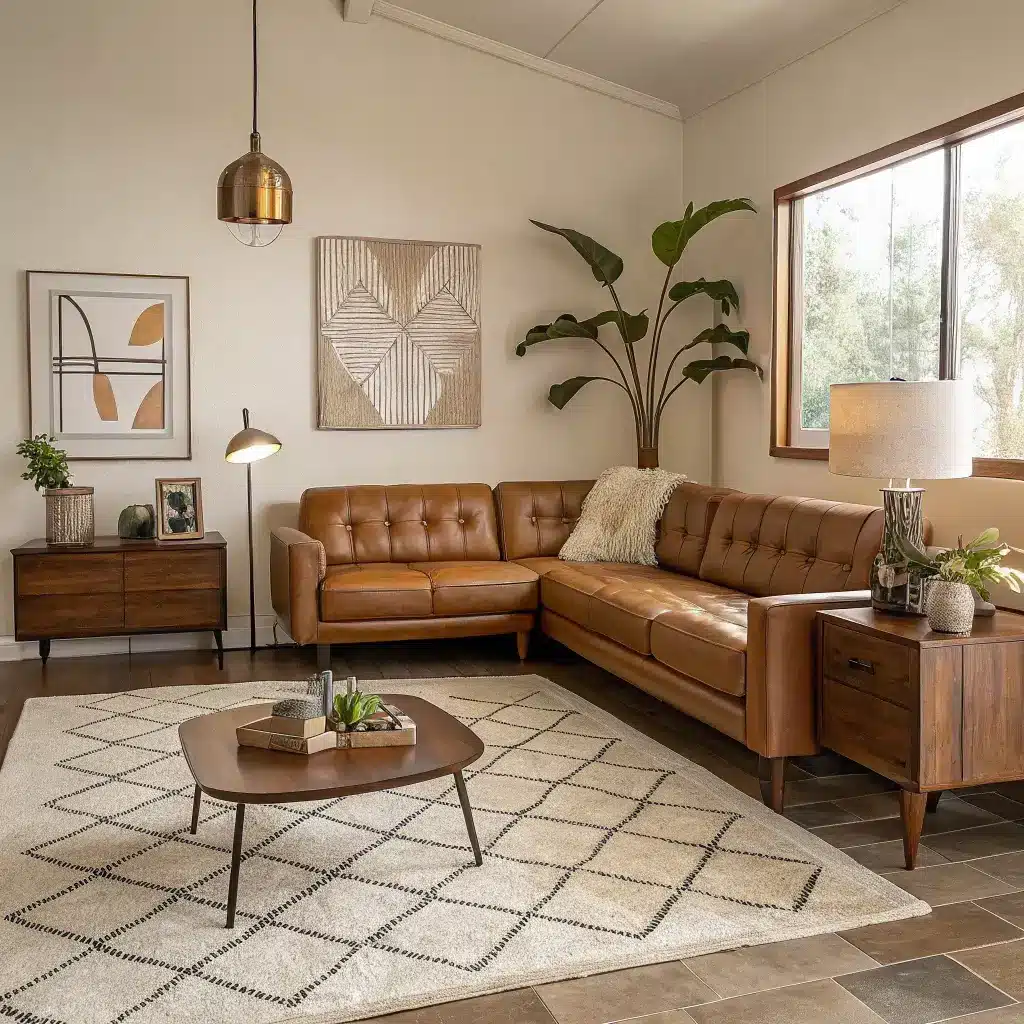
Update accents seasonally—rust and jewel tones in winter, pastels in spring. It keeps everything fresh without a full overhaul.
The Technical Stuff (For When You Want to Document Your Space)
Use natural light, shoot mid-morning or late afternoon. Use gridlines, shoot multiple angles, and edit for warmth. Vertical shots perform best online.
Different Ways to Do Beige (Because There’s More Than One Version)
Scandinavian: minimalist, clean lines, light wood. Boho: rattan, macramé, plants. Organic Modern: curved furniture, earthy tones. Minimal Modern: neutral everything, negative space.
Mistakes I’ve Made (So You Don’t Have To)
Too light furniture = washed out. No texture = flat. Over-styling = clutter. Wrong paint undertone = sickly. One light source = harsh shadows. Learn from me!